








It was only two months ago that we posted a blog raising awareness on how the cold can affect older people as we suffered one of the coldest springtimes for many years. Yet, just as the MET office raises its heatwave warning to Level 3 today we find ourselves now posting an important article on how heat can affect older persons.
A Level 3 heatwave warning means that we are actually in the middle of a sustained period of higher temperatures of over 32C in London and 28C in the northeast.
What does this warning really mean? Well it’s a signal for social care organisations and other public bodies to put certain plans to ensure those susceptible to heat, particularly the elderly, are put into action.
But it should also be a signal to all of us to take care in the heat. Older people are obviously more at risk in a heatwave, as they can’t adjust to temperature changes as swiftly as younger people. Many people over the age of 65 find themselves with long term health conditions and on prescription medication, both of which significantly reduces their ability to cope with an increase in the ambient temperature.
This being the case, heat stroke is the most serious effect on the elderly closely followed by heat exhaustion.
Symptoms of heat stroke include the following:
- An extremely high body temperature (above 103°F)
- Red, hot, and dry skin (no sweating)
- Rapid, strong pulse
- Throbbing headache
- Dizziness
- Nausea
Symptoms of heat exhaustion include:
- Heavy sweating
- Paleness
- Muscle Cramps
- Tiredness and Weakness
- Dizziness
- Headache
- Nausea or vomiting
- Fainting
- Skin: may be cool and moist
- Pulse rate: fast and weak
- Breathing: fast and shallow
Practical ways to reduce the effect of a heatwave include:
- Rest
- Have a shower or bath once or twice a day
- Keep in a cool shady part of your home and look into the possibility of having a mobile air con unit.
- Wear light clothing
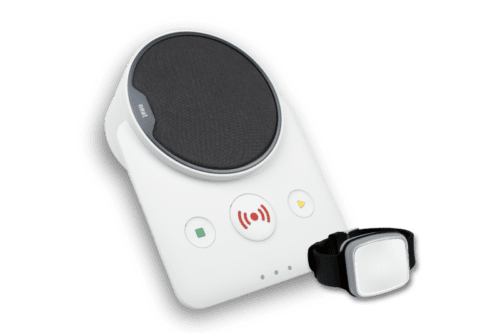
Having a personal alarm will also provide some level of protection as a user can raise an alarm the moment they feel unwell. Temperature sensors can also be connected to automatically raise an alarm if the ambient room temperature reaches a certain level.
Further information on how to cope with a heatwave is found on the NHS Choices Website.